Eating enough protein on semaglutide or tirzepatide
Key points
- Medicines such as semaglutide and tirzepatide reduce appetite, so meeting a protein target can become the harder problem, not overeating.
- Weight loss of any kind includes some loss of lean tissue. Enough protein plus resistance exercise is the usual way to limit it.
- A 2025 joint advisory notes that 1.2 to 1.6 g/kg per day has been proposed during active weight reduction, or an absolute target of 80 to 120 g per day.
- Practical tactics: protein first, small frequent meals, easy-to-eat foods.
- Your prescriber or a registered dietitian should set your actual target, especially with kidney disease.
This article is information, not medical advice, and it contains no guidance on medication dosing. Your prescriber decides what is right for you.
Why protein gets harder on these medicines
Semaglutide and tirzepatide act on gut and brain hormone pathways. They slow the emptying of the stomach and lower appetite. In the main semaglutide trial in adults with overweight or obesity, average body weight fell by 14.9 percent over 68 weeks, against 2.4 percent with placebo (Wilding et al., STEP 1). That is a large change, and it happens because people eat much less.
The joint advisory from the American College of Lifestyle Medicine, the American Society for Nutrition, the Obesity Medicine Association, and The Obesity Society says directly that adequate protein may be difficult to reach because of reduced appetite or taste aversions. When total food drops, protein is one of the nutrients that tends to fall with it.
What is at stake: lean mass
Losing weight by any method, including surgery and diet alone, reduces some lean tissue as well as fat. A commentary in The Lancet Diabetes and Endocrinology by researchers in muscle and body composition discusses how medically induced weight loss affects skeletal muscle and why it deserves attention. The joint advisory describes preserving muscle and bone as a core priority, particularly for older adults, people in or after menopause, and those who are sedentary. It names resistance or strength training and appropriate diet as the main tools, and adds that aerobic activity alone has a smaller effect on keeping lean mass during rapid weight loss.
How much lean mass is lost on these medicines, and what it means for health and function, is still being studied. We do not quote a percentage here because published estimates vary and depend on how body composition was measured.
Published protein targets
| Approach | Figure | Notes |
|---|---|---|
| General adult RDA | 0.8 g/kg per day | A minimum to prevent deficiency |
| Proposed during active weight reduction | 1.2 to 1.6 g/kg per day | Cited in the 2025 joint advisory |
| Based on fat-free mass | 1.5 g/kg of fat-free mass per day | Considered more accurate but needs a body composition measurement |
| Absolute target | 80 to 120 g per day | Suggested as simpler to follow |
| Limits noted by the advisory | Not below 0.4 to 0.5 g/kg; avoid prolonged 2 g/kg or more | Floor and ceiling |
The advisory also notes it is unclear whether to base the figure on actual body weight, an adjusted weight, or fat-free mass, because actual weight can overestimate the need in people with obesity. The ISSN position stand range of 1.4 to 2.0 g/kg per day applies to exercising people generally and is not specific to these medicines. Our GLP-1 protein calculator uses a default of 1.8 g/kg, which sits within that sports range, and shows what it means per meal. It is a planning aid. Ask your prescriber whether it suits you.
Strategies for a small appetite
Protein first
The advisory suggests eating protein-rich foods first in a meal to increase the chance of getting enough. If you can only finish half a plate, the protein will be in the half you ate.
Small, frequent meals
Four or five small meals are often easier than three large ones, and large meals can worsen nausea for some people. See foods and eating patterns for nausea and low appetite for what the advisory says about managing side effects.
Choose foods that are easy to eat
Soft, moist, lower-fat protein foods are commonly chosen when appetite is low: yogurt, cottage cheese, eggs, fish, tofu, and shakes. These are everyday options, not medical prescriptions, and tolerance varies from person to person. Very fatty or rich food is often harder.
Combine with strength training
Protein supports muscle most when the muscle is being used. Two or three short resistance sessions a week is a common starting point, and your clinician can advise on what is safe for you.
An example day built from USDA values
Values are approximate, taken from USDA FoodData Central SR Legacy entries, and your portions will differ.
| Meal | Food | Protein (approx.) |
|---|---|---|
| Breakfast | 3/4 cup plain nonfat Greek yogurt (170 g) | 17 g |
| Mid-morning | 2 hard-boiled eggs | 13 g |
| Lunch | 3 oz roasted chicken breast | 26 g |
| Afternoon | 1/2 cup 2% cottage cheese | 12 g |
| Dinner | 3 oz canned pink salmon, drained | 20 g |
| Total from these foods | about 88 g | |
That is within the 80 to 120 g range mentioned by the advisory, in five small servings, before counting any other food. More ideas with calories are in 25 high-protein snacks.
When to call your prescriber
Tell your prescriber or dietitian if you cannot eat much for several days, are losing weight faster than expected, are vomiting repeatedly, feel weak or dizzy, or have kidney disease or another condition that affects protein advice. A tracker cannot fix those problems and should not be used to push through them.
How SnapMacro helps
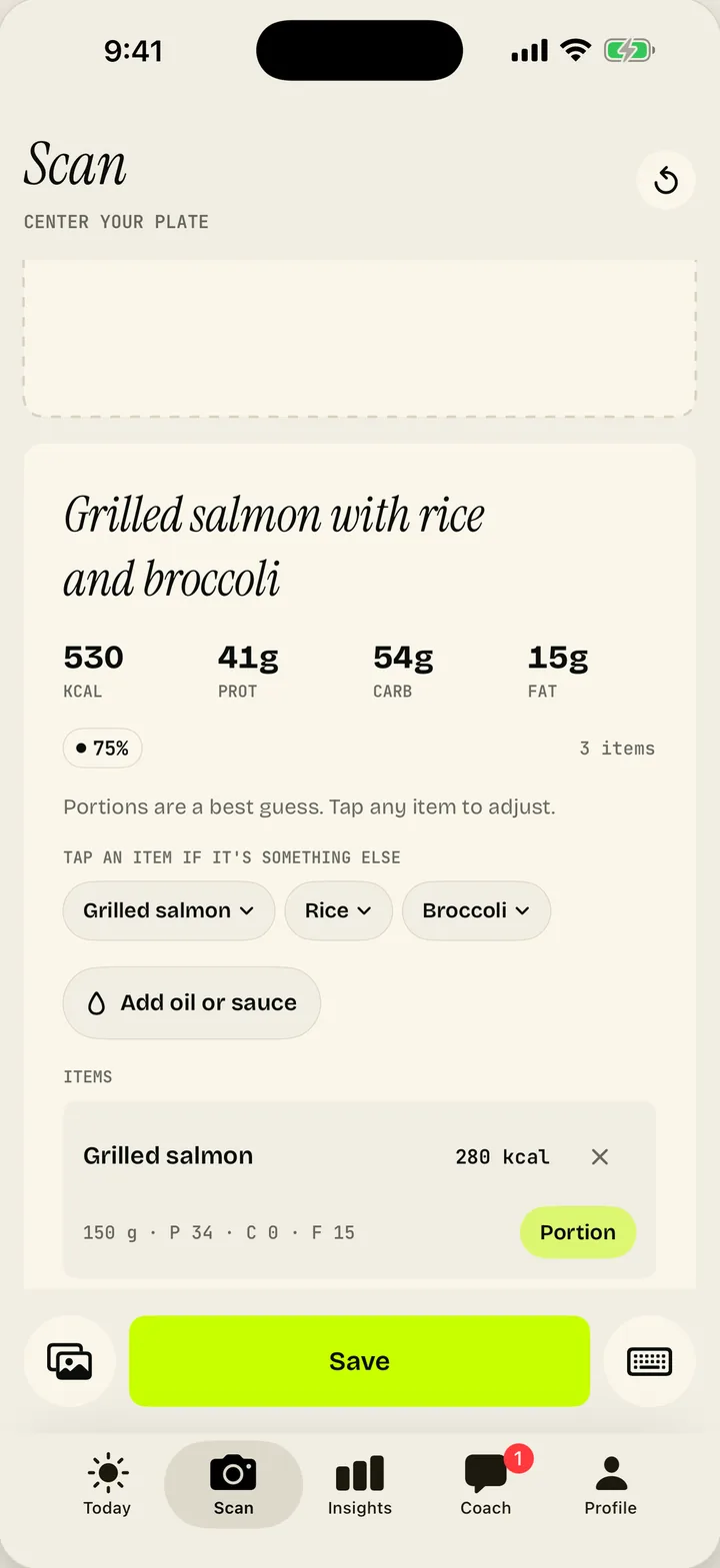
When you choose the GLP-1 situation in SnapMacro, protein becomes the first ring, the coach does not scold low-intake days, and a short check-in records appetite, nausea and energy so you have something concrete to share at appointments. A photo takes seconds on days when weighing food feels like too much. Photo estimates are approximate and every item can be edited. Read our GLP-1 nutrition tracking guide and the accuracy page. SnapMacro does not give medical advice or dosing guidance.
General information only. SnapMacro is not a medical device. Talk to your prescriber or a registered dietitian before changing how you eat.
Sources
- Nutritional priorities to support GLP-1 therapy for obesity: a joint advisory from the American College of Lifestyle Medicine, the American Society for Nutrition, the Obesity Medicine Association, and The Obesity Society. 2025. PubMed Central
- Wilding JPH, Batterham RL, Calanna S, et al. Once-weekly semaglutide in adults with overweight or obesity. N Engl J Med. 2021;384(11):989-1002. PubMed
- Jager R, Kerksick CM, Campbell BI, et al. ISSN Position Stand: protein and exercise. J Int Soc Sports Nutr. 2017;14:20. PubMed
- Prado CM, Phillips SM, Gonzalez MC, Heymsfield SB. Muscle matters: the effects of medically induced weight loss on skeletal muscle. Lancet Diabetes Endocrinol. 2024;12(11):785-787. PubMed
- USDA FoodData Central, SR Legacy. fdc.nal.usda.gov
SnapMacro
Skip the counting
Snap a photo of a meal and SnapMacro estimates the calories and macros. Every item is editable, and your targets adapt to your real weight trend.
Download on the App Store