25 high-protein snacks, with calories and protein
Key points
- The table lists 25 snacks with approximate calories and protein per serving, calculated from USDA FoodData Central values.
- Per calorie, the leanest options are plain nonfat Greek yogurt, canned tuna, shrimp, and chicken. Nuts and seeds carry protein but are calorie-dense.
- All figures are approximate: brands, preparation and serving sizes vary, so check labels.
- If you take a GLP-1 medicine or have kidney disease, ask your clinician before changing your protein intake.
A useful snack does one job well. For many people the job is to add protein between meals without adding much else, whether the goal is keeping hunger manageable, reaching a daily target, or getting enough when appetite is small. This list is organised around real numbers. For how much protein you may need in total, see how much protein per day.
The 25 snacks
Values are approximate. Calories and protein are calculated from the USDA FoodData Central (SR Legacy) per-100-gram entry linked in the last column, multiplied by the serving weight in the table. Serving weights are our own typical amounts, shown in common household measures. Brands and preparation will differ, particularly for jerky, protein powder and packaged cheese.
| Snack | Serving | Calories (approx.) | Protein, g (approx.) | USDA FDC ID |
|---|---|---|---|---|
| Plain nonfat Greek yogurt | about 3/4 cup | 100 | 17.3 | 170894 |
| Cottage cheese, 2% milkfat | 1/2 cup | 92 | 11.8 | 172182 |
| Hard-boiled eggs | 2 large eggs, about 100 g | 155 | 12.6 | 173424 |
| Edamame, frozen, prepared | about 3/4 cup shelled | 121 | 11.9 | 168411 |
| Beef jerky (chopped and formed) | 1 oz | 115 | 9.3 | 167536 |
| Light tuna, canned in water, drained | 3 oz | 73 | 16.5 | 173709 |
| Almonds | 1 oz | 162 | 5.9 | 170567 |
| Peanuts, dry-roasted, salted | 1 oz | 164 | 6.8 | 174262 |
| Part-skim mozzarella | 1 oz, one string cheese | 71 | 6.8 | 170847 |
| Pumpkin seed kernels, dried | 1 oz | 157 | 8.5 | 170556 |
| Sliced turkey breast, prepackaged | 2 oz, about 3 slices | 59 | 8.3 | 172941 |
| 1% milk | 1 cup | 102 | 8.2 | 170872 |
| Reduced-fat cheddar | 1 oz | 88 | 7.7 | 171292 |
| Sardines in oil, drained, with bone | 3 oz | 177 | 20.9 | 175139 |
| Shrimp, cooked, moist heat | 3 oz | 101 | 19.4 | 171971 |
| Smooth peanut butter | 2 tbsp | 191 | 7.1 | 174266 |
| Lentils, cooked | about 1/2 cup | 116 | 9.0 | 172421 |
| Firm tofu (calcium sulfate) | about 3.5 oz | 78 | 9.0 | 172448 |
| Soymilk, original, unfortified | 1 cup | 132 | 8.0 | 172446 |
| Tempeh | about 3.5 oz | 192 | 20.3 | 174272 |
| Pink salmon, canned, drained | 3 oz | 117 | 19.6 | 175175 |
| Part-skim ricotta | about 1/2 cup | 166 | 13.7 | 171248 |
| Roasted chicken breast, meat only | 3 oz | 140 | 26.4 | 171477 |
| Whey-based protein powder (generic) | about 1 scoop, 30 g | 106 | 23.4 | 173180 |
| Black beans, cooked | about 1/2 cup | 132 | 8.9 | 173735 |
How to choose by goal
Most protein for the fewest calories
Plain nonfat Greek yogurt (about 17 g for 100 kcal), canned light tuna (about 16.5 g for 73 kcal), shrimp (about 19 g for 101 kcal), and roasted chicken breast (about 26 g for 140 kcal) lead the list. If you are in a calorie deficit, these give you the most protein per calorie. See calorie deficit explained.
Portable and shelf-stable
Beef jerky, string cheese, nuts, pumpkin seeds, and single-serve tuna or salmon pouches travel well. Jerky and cured products are often high in sodium, so check the label if you watch salt.
Plant-based options
Edamame, tofu, tempeh, lentils, black beans, soymilk, pumpkin seeds and peanut butter all supply protein without animal products. Tempeh stands out at about 20 g per 100 g. Legumes bring fibre as well, which some people find filling and others find hard on the stomach, depending on how much they eat at once.
Low appetite
When appetite is small, volume matters. Soft, moist options such as yogurt, cottage cheese, ricotta, eggs, flaked fish, tofu and a protein shake take little chewing and are easy to portion. Many people on appetite-suppressing medication find small servings every few hours easier than large meals. See eating enough protein on a GLP-1 medication, and use the GLP-1 protein calculator to see what that looks like per meal.
Calorie-dense options
Nuts, seeds and nut butter give moderate protein with a lot of fat, roughly 155 to 190 kcal for 6 to 8.5 g of protein in the table above. They are valuable if you need more calories, and easy to over-pour if you do not. Measure them at first.
Pairing ideas
- Plain Greek yogurt with fruit, or a spoonful of peanut butter for extra energy.
- Cottage cheese with tomato or pineapple.
- Hard-boiled eggs with a little fruit.
- Edamame with salt and chilli.
- Canned salmon or sardines on crackers.
- Turkey slices wrapped around string cheese.
How much protein per snack?
There is no magic cutoff. A review by Schoenfeld and Aragon concluded that for people training for muscle, about 0.4 g/kg of protein per meal, spread across at least four meals, reaches roughly 1.6 g/kg per day. For a 70 kg person that is about 28 g per eating occasion. A snack of 10 to 25 g of protein is a sensible contribution towards that. Smaller snacks are fine as well; total daily protein matters most.
Things to watch
- Added sugar in flavoured yogurts and bars. Plain versions give more control.
- Sodium in jerky, deli meats and canned fish.
- Fish choices in pregnancy: if you are pregnant or breastfeeding, ask your clinician which fish and how much is right for you.
- Allergens: peanuts, tree nuts, soy, dairy, eggs and fish appear on this list.
- Kidney disease: protein limits may apply. Follow your care team.
How SnapMacro helps
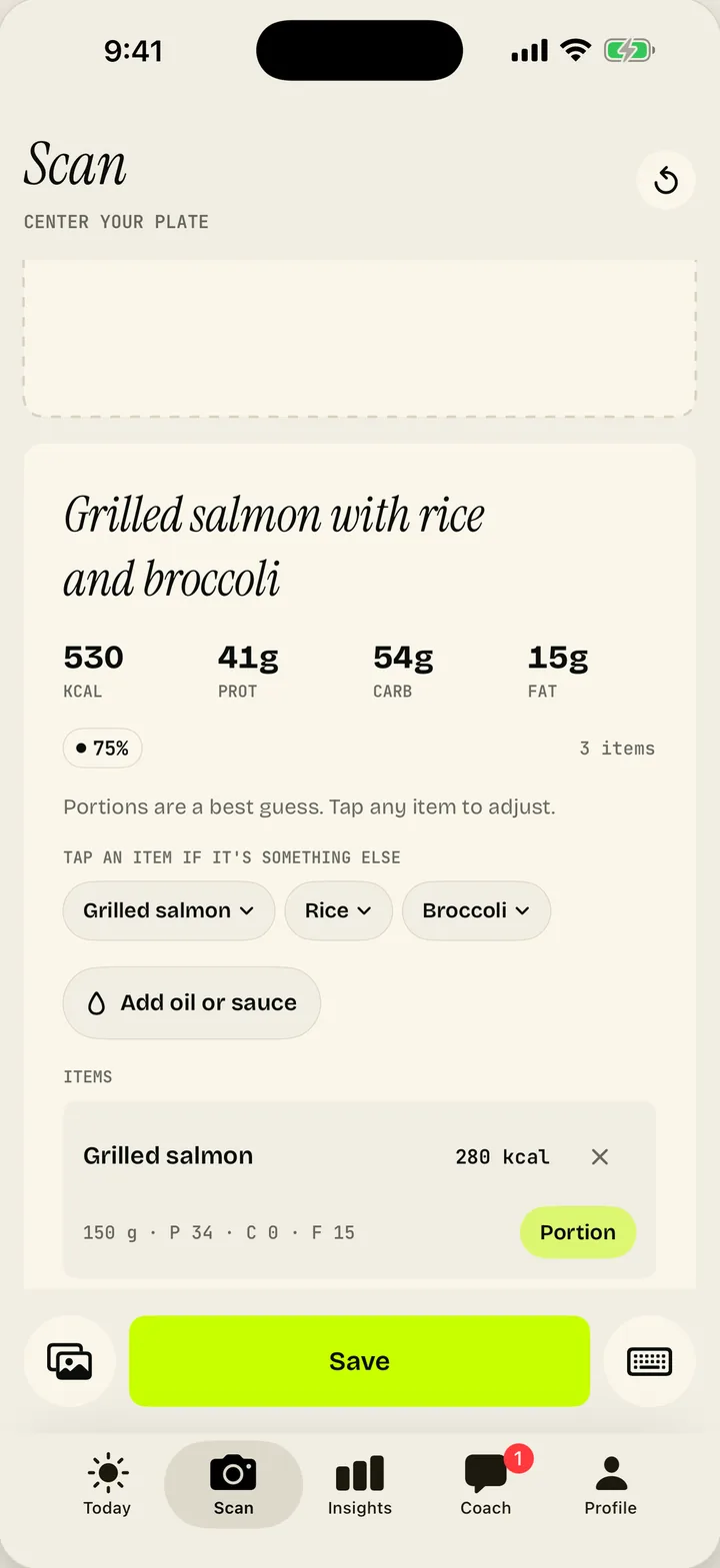
You can scan the barcode of a packaged snack to get its label values, or photograph a plate or say what you had and edit the portion. SnapMacro shows protein as its own ring so you can see whether you are on track by mid-afternoon. The numbers here are USDA reference values, which can differ from brands. Estimates from photos are approximate, as described on the accuracy page. To set a daily target, use the protein calculator.
General information only, not medical advice. SnapMacro is not a medical device. Values are approximate.
Sources
- USDA FoodData Central, SR Legacy data, entries linked in the table above. fdc.nal.usda.gov
- Schoenfeld BJ, Aragon AA. How much protein can the body use in a single meal for muscle-building? Implications for daily protein distribution. J Int Soc Sports Nutr. 2018;15:10. PubMed
SnapMacro
Skip the counting
Snap a photo of a meal and SnapMacro estimates the calories and macros. Every item is editable, and your targets adapt to your real weight trend.
Download on the App Store