How to count macros: a beginner's guide
Key points
- Macros are protein, carbohydrate and fat, which provide about 4, 4 and 9 kcal per gram, and alcohol about 7.
- Set calories first, then protein, then fat, and let carbohydrate fill the rest.
- Official population ranges are 10 to 35 percent of calories from protein, 20 to 35 from fat, and 45 to 65 from carbohydrate.
- You do not need grams to the decimal. Consistency over weeks matters more than precision.
- Counting macros is optional, and not suitable for everyone, for example people recovering from disordered eating.
Tracking macros means tracking where your calories come from rather than only how many there are. For some goals, such as building muscle or protecting it while you lose weight, that adds useful information. For others, calories alone are enough. This guide covers the basics and a worked example.
What are macros?
"Macros" is short for macronutrients, the three nutrients that supply most of your energy:
| Macro | Energy per gram | Common sources |
|---|---|---|
| Protein | about 4 kcal | Meat, fish, eggs, dairy, tofu, legumes |
| Carbohydrate | about 4 kcal | Grains, fruit, starchy vegetables, legumes, sugar |
| Fat | about 9 kcal | Oils, butter, nuts, fatty fish, cheese |
| Alcohol (not a macro) | about 7 kcal | Beer, wine, spirits |
These are the Atwater general factors that USDA FoodData Central uses to calculate energy values for most foods, and which the FAO also documents. They are averages. Real foods vary slightly, and fibre and the energy cost of digesting protein mean actual usable energy can differ a little. Food labels and databases use the same factors, so using them yourself is consistent with the numbers you see.
Step 1: set your calories
Everything else is a share of calories. If you do not have a figure, use the TDEE calculator and read how many calories you should eat. For weight loss, see how a calorie deficit works.
Step 2: set protein
Protein is usually set in grams per kilogram of body weight, not as a percentage, because your need depends on your body, not your calorie level. The ISSN position stand considers 1.4 to 2.0 g/kg per day sufficient for most exercising people. The general adult minimum is 0.8 g/kg. See how much protein per day and the protein calculator.
Step 3: set fat
The National Academies' Acceptable Macronutrient Distribution Range for fat in adults is 20 to 35 percent of calories. A common approach is to start near 25 to 30 percent and adjust for preference. Very low fat intakes are not generally recommended, because fat supplies essential fatty acids and helps absorb fat-soluble vitamins.
Step 4: carbohydrate fills the rest
Subtract the calories from protein and fat from your calorie target, then divide what remains by 4 to get carbohydrate grams. The Academies' range for carbohydrate is 45 to 65 percent of calories. Athletes and people who train hard often sit in the upper half; people who prefer higher fat may sit lower. Both fall within population ranges for many adults, and individual needs vary.
A worked example: 2,000 kcal, 75 kg
- Protein: 75 kg x 1.6 g/kg = 120 g, which is 480 kcal (24 percent).
- Fat: 25 percent of 2,000 = 500 kcal, divided by 9 = about 56 g.
- Carbohydrate: 2,000 - 480 - 500 = 1,020 kcal, divided by 4 = 255 g.
| Macro | Grams | Calories | Share |
|---|---|---|---|
| Protein | 120 | 480 | 24% |
| Fat | 56 | 500 | 25% |
| Carbohydrate | 255 | 1,020 | 51% |
| Total | 2,000 | 100% |
This is an illustration of the method, not a prescription. Your numbers will differ.
Grams or percentages?
Percentages are convenient for describing a diet but unstable for planning: if your calories change, your protein grams change with them even though your need for protein did not. Most people find it easier to fix protein in grams, set fat as a floor, and treat carbohydrate as flexible.
How precise do you need to be?
Less than you think. Hitting protein within about 10 percent most days, calories on a weekly average, and staying within broad ranges for fat is plenty for most goals. Label values are themselves rounded, and photo estimates are approximate. Over a week, errors partly average out. Our accuracy page explains where estimates are weakest, notably hidden oil and portion size.
Common beginner mistakes
- Counting everything except oil, sauces and drinks. These add up. See hidden calories in cooking oil.
- Chasing perfect percentages. Protein in grams first.
- Judging by single days. Look at the weekly average.
- Ignoring fibre and fruit and vegetables. Macros describe energy, not food quality.
Who should be careful
Numeric tracking can feed unhelpful patterns in some people. If you have or have had an eating disorder, or if logging makes you anxious, speak to a clinician before counting anything. People with kidney disease, diabetes, or who are pregnant should take targets from their care team. For a gentler approach see losing weight without obsessing. If you train seriously, see the guides for lifters and athletes.
How SnapMacro helps
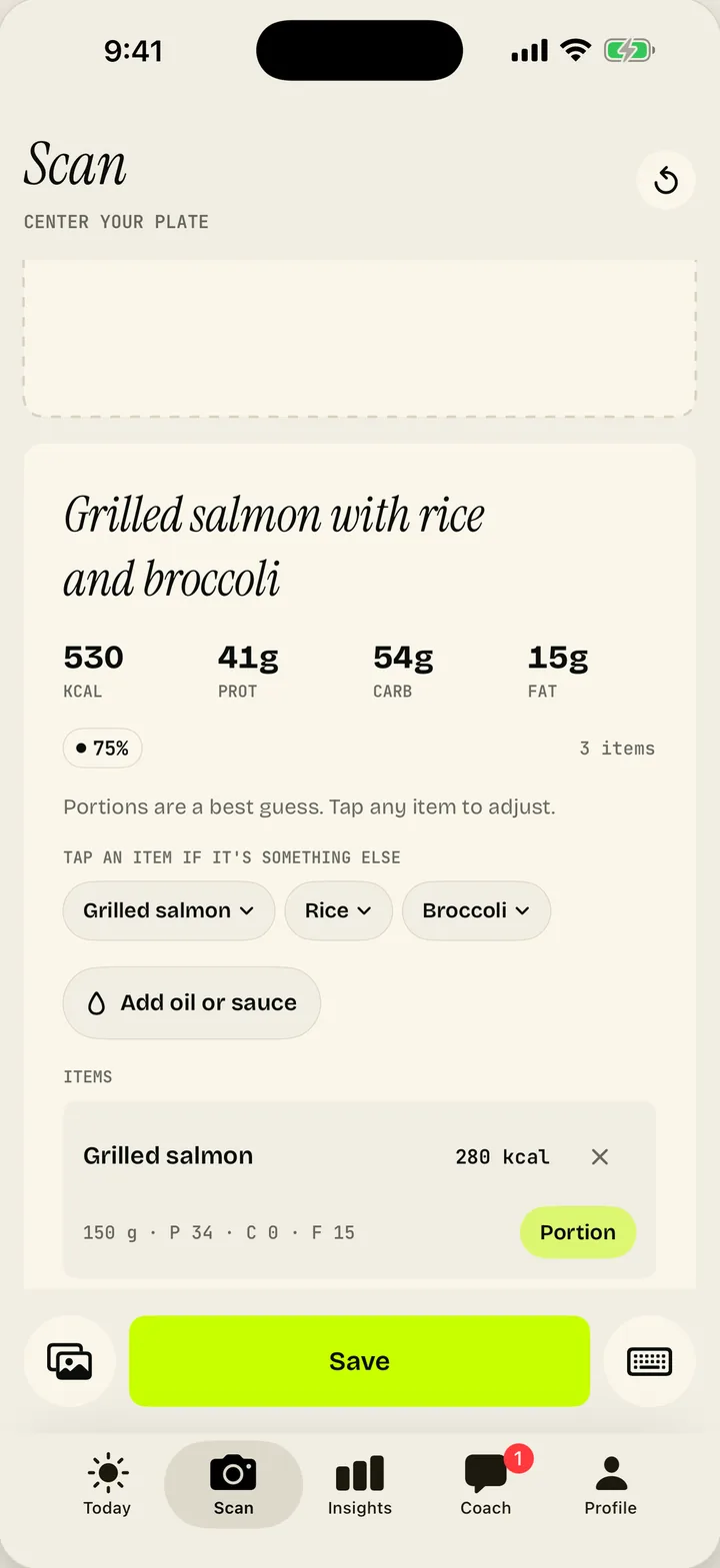
SnapMacro works out calories, protein, carbohydrate and fat from a photo, barcode, text or voice entry, then shows your day against your targets. Depending on your setup you see a single calorie ring, a protein-first view, or all macros, and targets can adapt to your weight trend. Estimates are approximate and editable.
General information only, not medical advice. SnapMacro is not a medical device.
Sources
- USDA FoodData Central. Frequently asked questions (energy calculated with Atwater general factors of 4, 9 and 4 kcal/g). fdc.nal.usda.gov/faq
- FAO. Food energy: methods of analysis and conversion factors, chapter 3. fao.org
- National Academies. Dietary Reference Intakes for Energy, Carbohydrate, Fiber, Fat, Fatty Acids, Cholesterol, Protein, and Amino Acids. 2005. nap.nationalacademies.org
- Jager R, et al. ISSN Position Stand: protein and exercise. J Int Soc Sports Nutr. 2017;14:20. PubMed
SnapMacro
Skip the counting
Snap a photo of a meal and SnapMacro estimates the calories and macros. Every item is editable, and your targets adapt to your real weight trend.
Download on the App Store